
Lorem ipsum dolor sit amet consectetur adipisicing elit eiusmod tempor incididunt ut labore et dolore magna aliqua ut enim ad minim veniam quis nostrud exercitation ulla

Customers no longer follow a straight line from awareness to purchase. They browse on a phone, ask a chatbot a question, call a support line, and finish the conversation in a store, often within the same day. A strong omnichannel customer experience treats all of that as one continuous conversation instead of several disconnected ones. Building an effective omnichannel CX strategy means making sure every channel shares the same information, the same tone, and the same understanding of who the customer is, no matter where they show up next.
| Quick answer: An omnichannel customer experience connects every touchpoint- web, mobile, in-store, phone, and social, into a single, consistent journey where customer history and context carry over automatically. A well-built omnichannel CX strategy relies on shared data systems, consistent messaging, and channel handoffs that do not force customers to repeat themselves. This becomes even more effective when businesses invest in outsourced customer support that delivers consistent service across every touchpoint. Businesses that get this right see stronger retention and fewer support escalations because customers feel recognized rather than processed, a benefit closely tied to 24/7 customer support that keeps assistance available whenever customers need it. The starting point is almost always unifying customer data behind the scenes before trying to unify the front-end experience. |
| Definition: An omnichannel customer experience is an approach where every channel a customer might use, website, app, phone, chat, social media, or physical location- shares the same underlying data and context, so a customer can move between channels without losing progress or having to repeat information. |
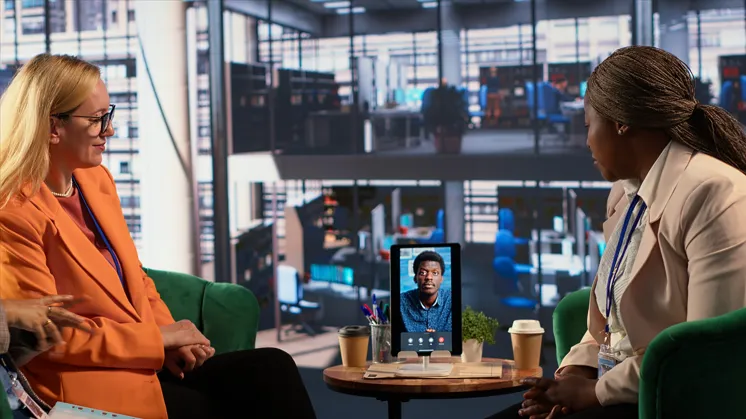
The word omnichannel gets used loosely, but the definition matters. A true omnichannel customer experience does not just mean a business is present on many channels; it means those channels talk to each other. If a customer starts a return request by chat and finishes it by phone, the phone agent should already see the chat history. That continuity is the entire point, and it is what separates a genuine omnichannel customer experience from a business that simply operates several disconnected channels at once.
Next-gen customers, particularly those who grew up moving fluidly between apps, devices, and social platforms, expect that fluidity from every brand they interact with. An omnichannel CX strategy matters because these customers do not think in terms of channels at all, they think in terms of one relationship with a company. When a business fails to connect its channels, the customer experiences that failure directly, as repeated questions, lost order history, or conflicting information from different departments. A properly built omnichannel CX strategy removes that friction, which builds trust faster and reduces the number of times a customer has to explain their situation from the beginning.
Several building blocks need to work together to deliver a genuine omnichannel customer experience rather than just a collection of separate channels.

Building an omnichannel CX strategy is less about adding new channels and more about connecting the ones a business already has.
| Aspect | Omnichannel Customer Experience | Multichannel Experience |
| Data Sharing | Fully connected across all channels | Each channel often operates on its own data |
| Customer Continuity | Context carries over automatically | Customers often repeat information |
| Messaging Consistency | Unified tone and information everywhere | Can vary noticeably between channels |
| Support Handoffs | Smooth transitions between channels | Often requires starting over |
| Customer Perception | Feels like one relationship | Can feel like separate interactions |

Many businesses believe they have achieved an omnichannel customer experience simply because they operate a website, an app, and a store, without realizing those systems rarely share data behind the scenes. This gap becomes visible the moment a customer expects continuity and does not get it, such as a support agent who cannot see a purchase made through the app. Another common pitfall is treating an omnichannel CX strategy as a one-time project rather than an ongoing discipline, since new channels and tools keep entering the mix and need to be integrated the same way. Without regular audits, even a well-built system can quietly drift back into disconnected silos as teams adopt new tools independently.
| Ready to unify your customer journey across every channel? See how our customer support services approach integration, or contact our team to talk through your current setup with our team. |
What is the difference between omnichannel and multichannel?
Multichannel means a business operates on several channels, while an omnichannel customer experience means those channels share data and context, so customers do not have to repeat themselves when switching between them.
What is the first step in building an omnichannel CX strategy?
Start by auditing where customer data currently lives. Most gaps in an omnichannel customer experience come from disconnected systems rather than a lack of channels themselves.
Does an omnichannel CX strategy require new technology?
Often, yes, at least an integration layer or unified data platform. However, many businesses can connect existing tools before investing in entirely new systems.
How do you measure the success of an omnichannel customer experience?
Track cross-channel metrics like handoff completion rates, repeat contact rates, and customer satisfaction scores across full journeys, not just performance within a single channel.
Can small businesses realistically build an omnichannel CX strategy?
Yes. Even connecting two or three core channels, such as email, chat, and phone, around shared customer data delivers meaningful improvements before expanding further.

© 2025 Vertical Edge Limited | All Rights Reserved